



Last week’s post seemed to be really well received (thanks for all the kind comments), so I thought I’d follow up with a part 2 focused on the implementation of your goals.
Alongside wrapping up my own goal planning work, there was a big focus on optimising occupancy across our existing SA portfolio.
As many of you know, January is never the kindest month in the SA industry, so all the more reason to dig deep.
We took a three-pronged approach:
Whilst we know some of these avenues will be slower-burn opportunities, I feel like we had a pretty successful week, securing a few longer stays, some extensions, and several short stays.
The other curveball this time of year when managing multiple properties is potential boiler issues.
We’ve had our fair share of boiler challenges, but each member of the team has learned (or is learning) how to repressurise boilers and restart them. Most importantly, however, is having a reliable engineer who can respond when needed.
We’ve also learned it’s worth investing in backup electric heaters to have ready, just in case.
In the last post, I wrote about how to set psychologically optimised goals that are congruent — where your conscious and unconscious mind are aligned in relation to the goals you set.
People often get excited about setting big goals, but when it comes down to the nitty gritty of actually doing the work, this is where many let themselves down.
They tell themselves they’ll come back to it later.
Don’t be that person.
Instead, you need to take your Big Hairy Audacious Goal (BHAG) and translate it into a project plan.
This part of the process is uncomfortable, which is exactly why so many people skip it.
But having a plan keeps you aligned, focused, and clear on what needs to happen next.
BHAGs don’t manifest on their own. They require intentional work to define, map out, and execute.
When you invest in this process, you gain:
Here’s a quick summary of the process I’ve been taught and use each year.
Taking everything into account, list 5–20 projects that would have an immediate impact on your business.
Think through all the strategies and tactics that could create a positive net result.
If a project has a cost, such as marketing or advertising spend, consider whether the likely outcome justifies the investment.
Eliminate all but three projects.
Ask yourself:
For each project, answer these four key questions:
What needs to happen to:
Examples might include:
Think about what can be ritualised and repeated.
Think it through carefully and allocate deadlines you can commit to in your diary.
Who can you involve to help you follow through?
This could include:
Repeat this process for Projects 2 and 3.
The final stage is creating your 12-week project plan.
Create a grid covering 84–91 days, then populate it with:
Schedule everything using the tools that work best for you:
Allocate sufficient time and protect it in your diary.
As a closing note, make sure you define your very first step towards your big goal — and make it achievable.
One of the fundamental requirements for change is taking action.
That becomes much easier when you know exactly what your first step is.
Have a great start to next week.
Tsen Warton is a property investor and entrepreneur who started his journey in 2006. After building a successful portfolio while working full-time, he went all-in on property in 2014. Today, he helps entrepreneurs grow their investments in a way that supports the life they want to live.
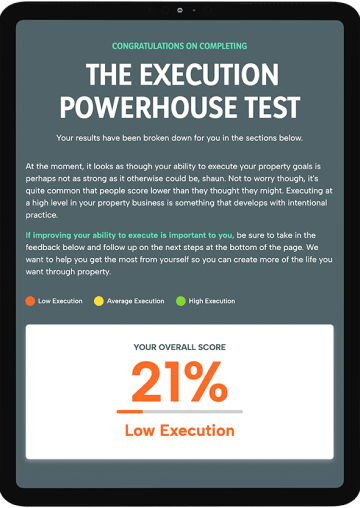
Take our Powerhouse Assessment and get insights into your strategy, team dynamics, and execution routines. Find out if you can set solid goals and execute like a pro.